
Applying the Wisdom of Mahinga Kai: Defining Boundaries of Student AI Use
AUTHOR: TAKE AI
How do we distinguish between a student who has used AI to bypass thinking and one who has used AI to amplify it?
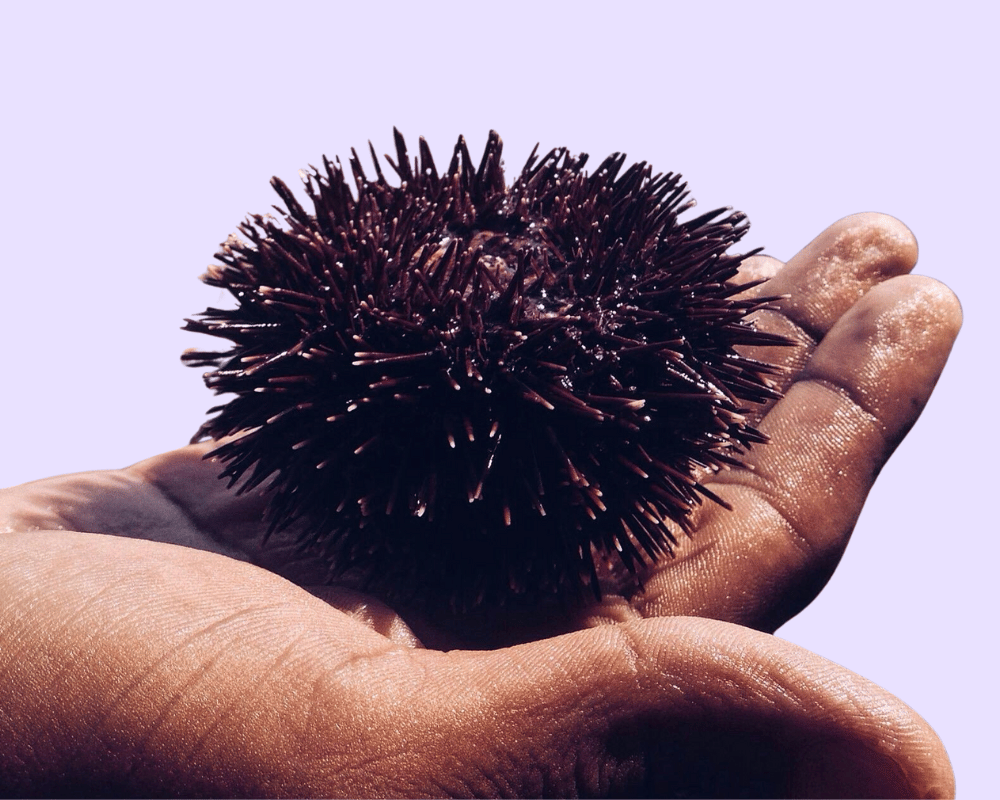
In Aotearoa New Zealand, we have a profound concept called Mahinga Kai, or ‘to work the food’ - the practice of gathering food from the environment. It is a philosophy of resource management that requires deep knowledge, patience, and the right tools for the right environment.
As I look at the ‘‘rising tide" of AI in education, I find myself returning to this path.
I call it ‘Te Ara o te Mahinga Kai’ (The Path of the Harvest).
It’s a framework for thinking about student AI use, not through the lens of ‘‘cheating," but through the lens of ‘‘the craft of the catch.’’
Kohikohi Kaimoana: The Intimacy of Hand-Gathering
The Analogy: Imagine standing on a rocky shoreline at low tide, gathering paua or kina by hand. This is the most intimate form of harvest. You see every shell; you feel the texture of the rock; you understand the environment because you are physically in it.
The AI Application: This is the No-AI Zone. In a world of instant generation, we must protect the "hand-gathering" phase of learning. This is where a student struggles with a blank page, wrestles with a complex sentence, or solves a math problem using only their own cognitive "muscles."
Why it’s thought-provoking: We often view "No AI" as a restriction. In this framework, it’s a sanctuary. If a student never learns to "hand-gather" their own thoughts, they will never have the foundational strength to navigate the deep ocean later. We must value the struggle as much as the solution.
Hī Ika: The Precision of the Line
The Analogy: You’ve moved off the rocks and onto a small waka. You are line fishing, Hī ika. You are using a tool (a hook and line) to reach further than your arms can go. But you are still the one holding the line. You feel the ‘‘strike" on the hook. You decide when to pull and when to let go.
The AI Application: This is Assistive AI. Here, the AI is a drafting partner. The student uses it to brainstorm, to structure a messy thought, or to simplify a dense text. The tool is extending their reach, but the student is "hooked in." They are feeling the weight of every suggestion the AI makes and deciding which ones are "keepers."
The Shift: At this stage, the student is no longer just a "writer"; they are an editor. They are learning the skill of discernment—the ability to look at an AI-generated idea and say, "That’s a good hook, but the logic is weak."
Kupenga: The Mastery of the Great Net
The Analogy: Now, you are in the deep water. You are casting a Kupenga—a massive fishing net. You are harvesting at a scale that was impossible by hand or by line. You are bringing in thousands of "fish" (data, ideas, content) in a single haul.
The AI Application: This is Integrated AI. This is the future of work. We aren't asking the student to write a paragraph; we are asking them to manage a system. They might use AI to analyse a 100-page dataset, generate a complex piece of code, or synthesise research from twenty different sources.
The Challenge: The skill in net-fishing isn't the "catch" - it's the sorting. A net brings in everything: the prize fish, the small fry, and the "by-catch" (the rubbish, the bias, the hallucinations). The student’s role shifts to Quality Control. Do they have the wisdom to see the ‘‘plastic" caught in the net? Do they have the integrity to throw back the hallucinated data?
Moving Beyond the "traffic light system"
For too long, the conversation around AI in schools has been a ‘‘Traffic Light" system
‘Te Ara o te Mahinga Kai’ suggests something different.
It suggests that learning is a journey from the shore to the deep.
We start with (Kohikohi Kaimoana) using our own hands to build our character and core skills.
We move to the (Hī Ika) using a line but feeling the strike to learn how to partner with tools.
We head to the (Kupenga) casting our net to learn how to lead systems and manage complexity.
The goal of education in the age of AI shouldn't be to keep students on the shore. It should be to ensure that by the time they reach the deep water, they are master navigators who know exactly what a "good catch" looks like.